


Doing the right thing is not always easy, especially when personal interests, relationships, or opportunities are at stake. Life often presents difficult choices where acting with honesty and integrity requires courage, sacrifice, and a willingness to face unfavorable consequences. Such moments reveal the true measure of a person’s character, as moral principles are tested not by words but by decisions made under pressure. Choosing what is right over what is convenient may come at a personal cost, but it also reflects a commitment to values that cannot be measured by material rewards or public recognition.
When Doing the Right Thing Comes at a Personal Cost
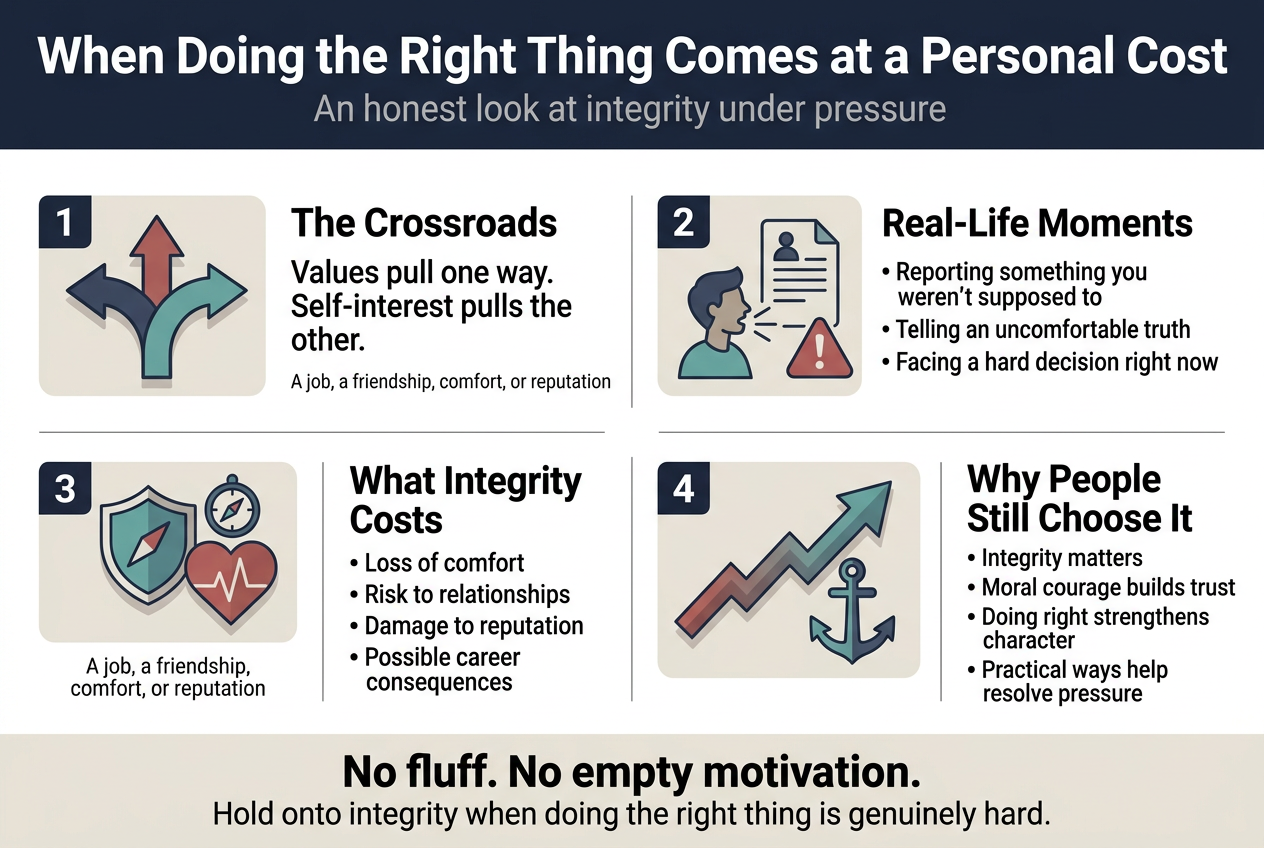
You already know what the right thing to do is. The hard part is doing it when it costs you something — a job, a friendship, your comfort, or your reputation.
This is for you if you’ve ever stood at that crossroads where your values pulled one way and self-interest pulled the other. Maybe you reported something you weren’t supposed to. Maybe you told an uncomfortable truth. Maybe you’re sitting with a decision right now, weighing what’s right against what’s easy.
Doing the right thing sounds simple until it isn’t. And nobody talks enough about the real price of personal integrity — or why so many good people still choose it anyway.
In this post, you’ll get a clear look at what ethical decision making actually looks like in everyday life, not just in textbooks. You’ll see real situations where maintaining integrity under pressure came with a genuine cost. And you’ll walk away with practical ways to strengthen your resolve when moral courage feels harder than it should.
No fluff. No empty motivation. Just an honest look at why integrity matters — and how to hold onto it when it’s genuinely hard.
Understanding the True Meaning of Doing the Right Thing
Defining Ethical Action Beyond Personal Convenience
Doing the right thing isn’t about making choices that feel comfortable or cost you nothing. Real ethical decision making kicks in when honesty, fairness, or accountability requires you to give something up — your time, your reputation, your relationships, or your peace of mind.
Your values only truly show up when they’re tested, not when they’re easy.
Why Moral Choices Often Conflict With Self-Interest
Most ethical dilemmas put two things in direct competition: what benefits you versus what’s right for others or the situation. Choosing ethics over convenience often means:
- Speaking up when staying quiet would protect you
- Admitting a mistake when hiding it would be easier
- Standing up for what’s right when it risks your social standing
Personal integrity isn’t a passive trait — it’s an active choice made under pressure.
The Difference Between Easy Ethics and Tested Ethics
| Easy Ethics | Tested Ethics |
|---|---|
| Being honest when it doesn’t hurt you | Being honest when it costs you something real |
| Supporting fairness in theory | Defending it when you’re personally at risk |
| Valuing kindness in comfortable moments | Maintaining moral courage when it’s inconvenient |
Tested ethics reveal who you actually are, not just who you want to be.
Recognizing the Personal Costs of Ethical Decisions
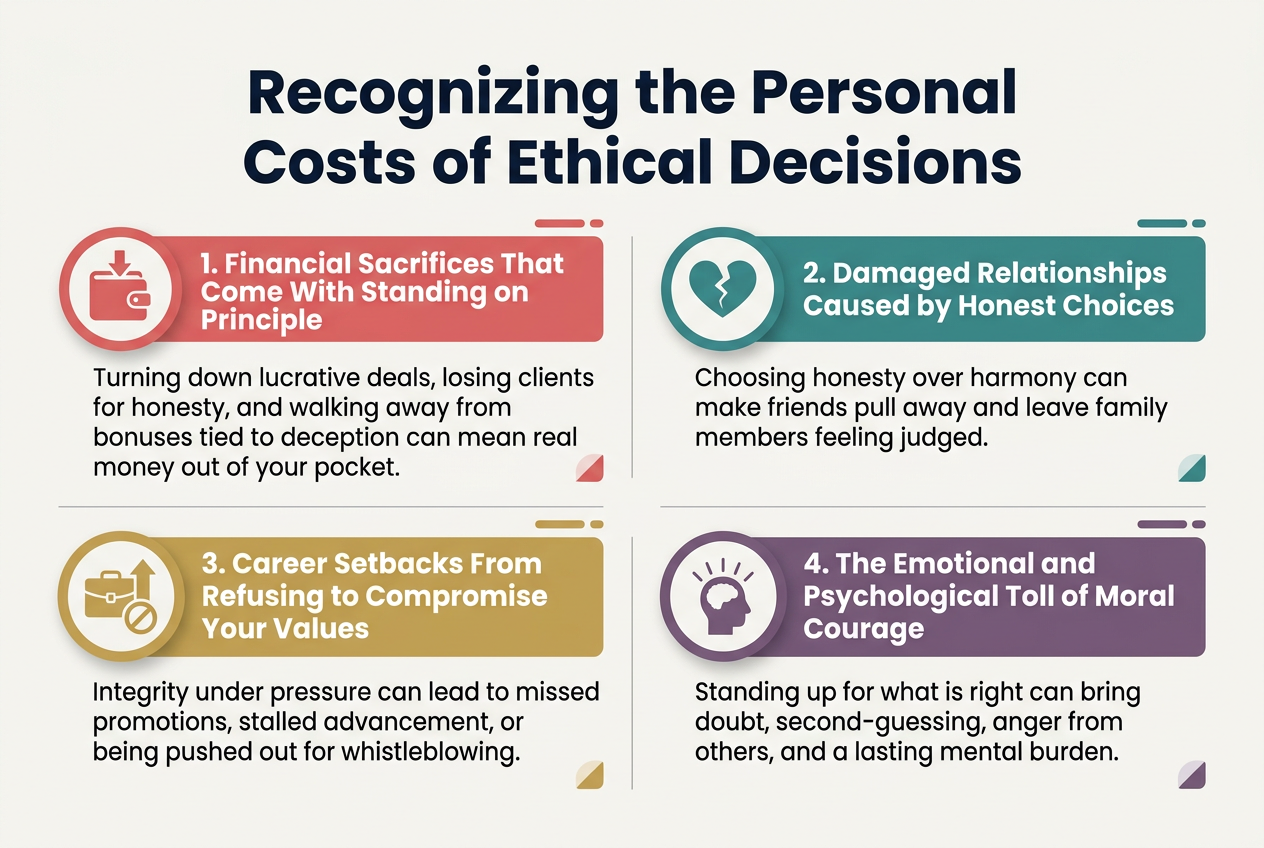
Financial Sacrifices That Come With Standing on Principle
Doing the right thing can hit your wallet hard. You might turn down a lucrative deal that crosses ethical lines, lose clients for speaking honestly, or walk away from a bonus tied to deceptive practices. These aren’t small decisions — they’re real money out of your pocket.
Damaged Relationships Caused by Honest Choices
When you choose honesty over harmony, some people won’t stick around. Friends may pull away when you refuse to cover for them. Family members might feel judged by your choices. The cost of integrity is sometimes the very relationships you treasured most.
Career Setbacks From Refusing to Compromise Your Values
Maintaining integrity under pressure can stall your climb up the ladder. You might get passed over for a promotion because you wouldn’t play politics, or even pushed out entirely for whistleblowing. Your values can make you unpopular in environments that reward compliance over character.
The Emotional and Psychological Toll of Moral Courage
Standing up for what’s right is exhausting. You carry doubt, second-guess yourself, and sometimes absorb the anger of people you’ve disappointed. Moral courage doesn’t just cost you externally — it weighs on your mind long after the decision is made.
Real-Life Situations Where Good People Pay a High Price
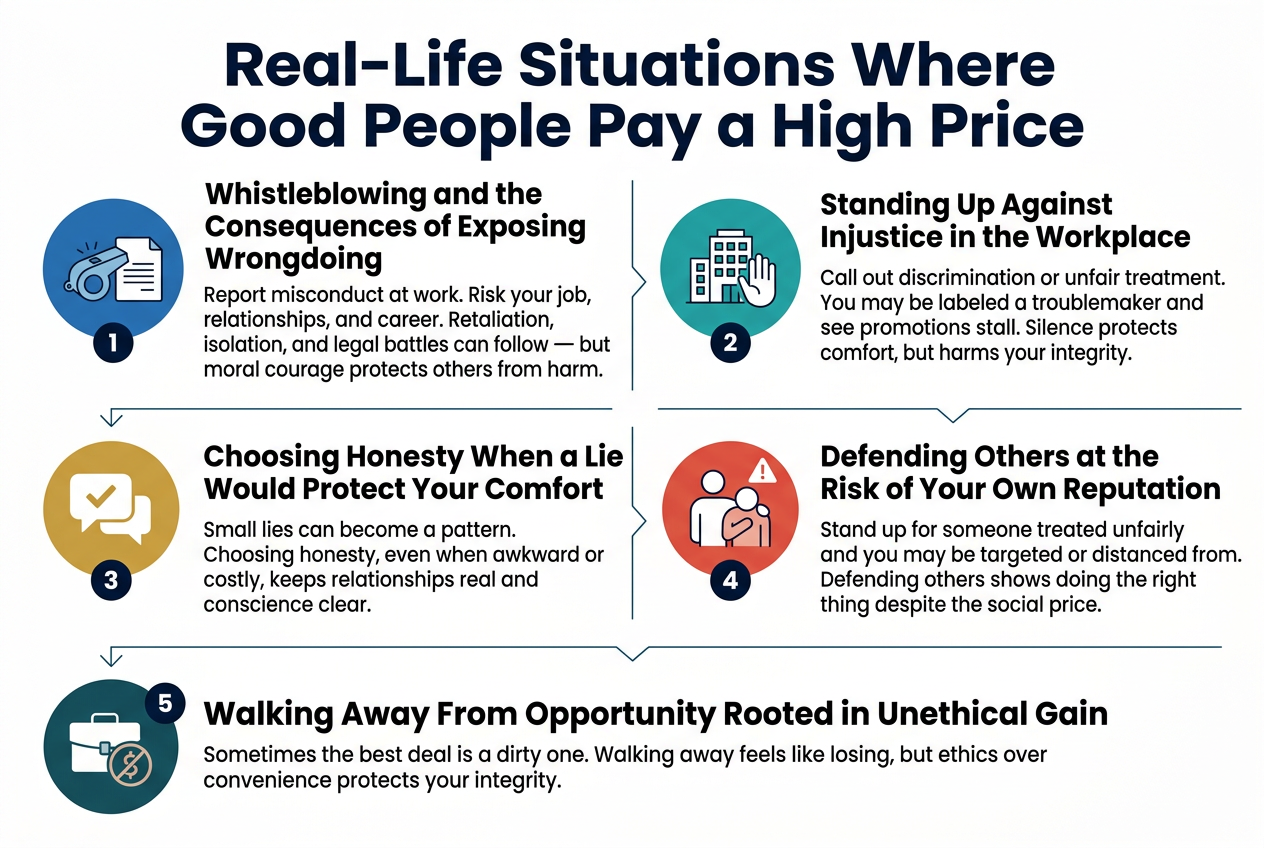
Whistleblowing and the Consequences of Exposing Wrongdoing
When you report misconduct at work, you risk your job, your relationships, and sometimes your entire career. Whistleblowers often face retaliation, isolation, and legal battles — yet their moral courage protects countless others from harm.
Standing Up Against Injustice in the Workplace
When you call out discrimination or unfair treatment, you might get labeled a troublemaker. Your promotions could stall. Still, staying silent makes you complicit — and that cost to your personal integrity is harder to live with long-term.
Choosing Honesty When a Lie Would Protect Your Comfort
A small lie feels harmless until it becomes a pattern. Choosing honesty — even when it’s awkward or costly — keeps your relationships real and your conscience clear.
Defending Others at the Risk of Your Own Reputation
Standing up for someone being treated unfairly puts a target on your back. People may distance themselves from you. But defending others is one of the clearest expressions of doing the right thing, regardless of the social price.
Walking Away From Opportunity Rooted in Unethical Gain
Sometimes the best deal on the table is a dirty one. Walking away feels like losing — but choosing ethics over convenience is how you protect something more valuable than any short-term win: your integrity.
Why People Still Choose Integrity Despite the Cost
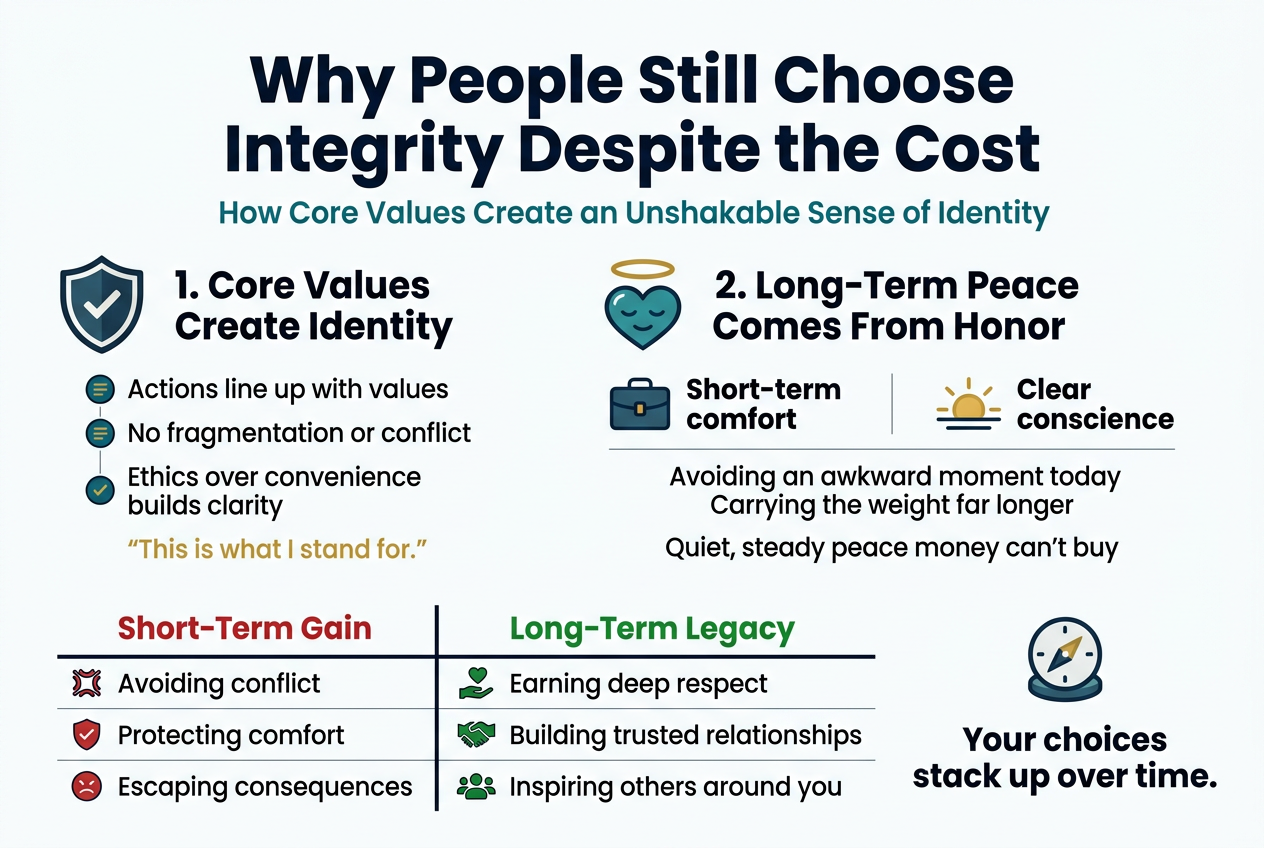
How Core Values Create an Unshakable Sense of Identity
When your actions line up with your values, something clicks internally. You stop feeling fragmented or conflicted. Personal integrity isn’t just a moral checkbox — it’s the backbone of who you are. When you choose ethics over convenience, you’re essentially telling yourself, “This is what I stand for.” That clarity becomes armor.
The Long-Term Peace That Comes From Acting With Honor
Short-term comfort from a compromised choice doesn’t age well. You might avoid an awkward moment today, but you carry the weight of that decision far longer than you’d expect. Doing the right thing — even when it stings — gives you something money can’t buy: a clear conscience. That quiet, steady peace is something no external reward can replicate.
Building a Legacy Worth More Than Short-Term Gain
| Short-Term Gain | Long-Term Legacy |
|---|---|
| Avoiding conflict | Earning deep respect |
| Protecting comfort | Building trusted relationships |
| Escaping consequences | Inspiring others around you |
The people who stand up for what’s right rarely regret it years later. Your choices stack up over time. What you do under pressure — especially when no one’s watching — shapes the story others tell about you, and more importantly, the one you tell yourself.
How to Strengthen Your Resolve When Doing Right Gets Hard
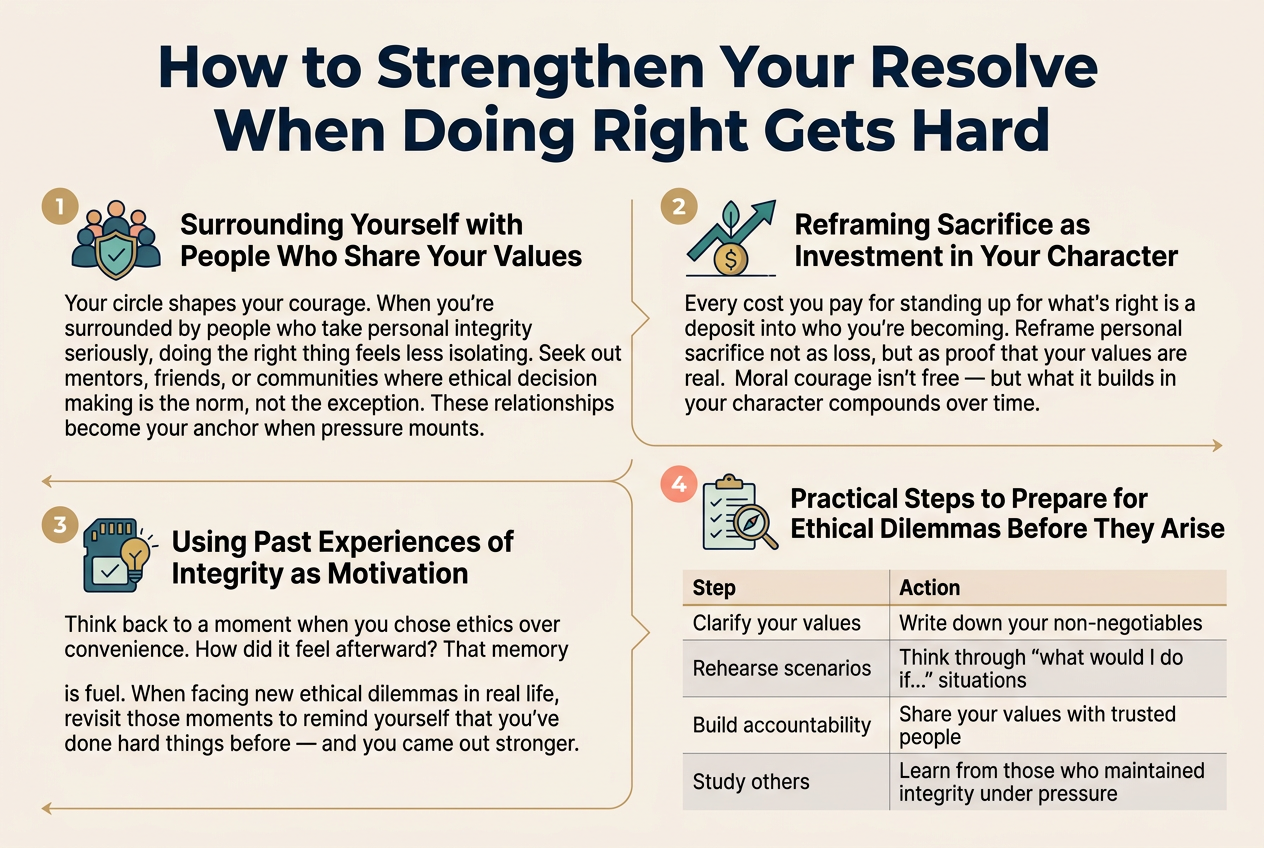
Surrounding Yourself with People Who Share Your Values
Your circle shapes your courage. When you’re surrounded by people who take personal integrity seriously, doing the right thing feels less isolating. Seek out mentors, friends, or communities where ethical decision making is the norm, not the exception. These relationships become your anchor when pressure mounts.
Reframing Sacrifice as Investment in Your Character
Every cost you pay for standing up for what’s right is a deposit into who you’re becoming. Reframe personal sacrifice not as loss, but as proof that your values are real. Moral courage isn’t free — but what it builds in your character compounds over time.
Using Past Experiences of Integrity as Motivation
Think back to a moment when you chose ethics over convenience. How did it feel afterward? That memory is fuel. When facing new ethical dilemmas in real life, revisit those moments to remind yourself that you’ve done hard things before — and you came out stronger.
Practical Steps to Prepare for Ethical Dilemmas Before They Arise
| Step | Action |
|---|---|
| Clarify your values | Write down your non-negotiables |
| Rehearse scenarios | Think through “what would I do if…” situations |
| Build accountability | Share your values with trusted people |
| Study others | Learn from those who maintained integrity under pressure |
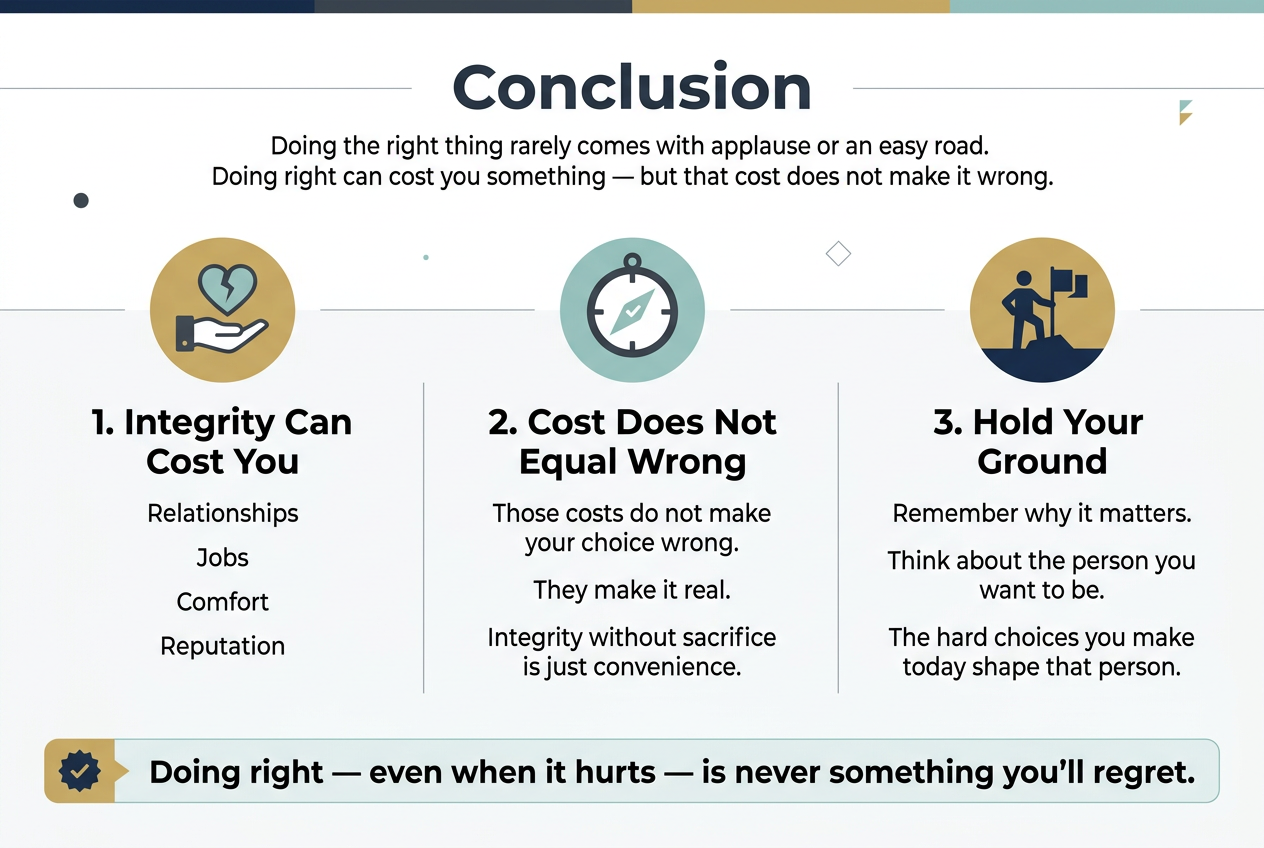
Doing the right thing rarely comes with applause or an easy road. More often, it costs you something — a relationship, a job, your comfort, or even your reputation. But as you’ve seen throughout this post, those costs don’t make your choice wrong. They make it real. Integrity without sacrifice is just convenience, and deep down, you already know the difference.
When the moment comes and doing right feels too heavy to carry, remember why it matters to you. Think about the kind of person you want to be when you look back on your life. The hard choices you make today shape that person. So hold your ground, lean on your values, and trust that doing right — even when it hurts — is never something you’ll regret.


